

Housing is one of the most important issues facing Courtenay and the Comox Valley.
It is also one of the most complicated.
When I talk about housing, I think it is important to be clear about what a municipality can do, what it cannot do on its own, and what can be accomplished when local governments, non-profit organizations, developers, senior governments and community partners work together.
My involvement with this issue goes back more than a decade.
Starting with homelessness support
When I was first elected in 2014, I worked at the Comox Valley Regional District to create a Homelessness Support Service. That service began in 2015 and created revenue that allowed the Regional District to support local members of the Coalition to End Homelessness.
The work was informed by regional planning tools, including the Comox Valley Regional Housing Needs Assessment and the Poverty Reduction Plan.
That approach recognized an important reality: homelessness cannot be addressed simply by putting a roof over someone's head. People also need access to outreach, support services and the resources necessary to remain housed.
That work helped support projects including Habitat for Humanity housing on Piercy Road, Transition Society housing and Dawn to Dawn projects.
Bringing the housing community together
After becoming mayor in 2018, I pushed for a housing symposium, which was held in 2019 at CFB Comox.
The goal was to bring the people working on different parts of the housing system into the same room.
Non-profit organizations, developers, local and provincial elected officials and staff participated.
I believe that kind of collaboration is essential because no single organization or level of government can solve the housing problem by itself.
The City has also used its Affordable Housing Fund to support projects identified as priorities by Council.
The result has been a range of housing and shelter projects serving different needs in our community.
What has actually been delivered?
It is useful to look at the projects rather than simply talk about housing in general.
Through collaboration between different organizations and levels of government, our community has benefited from:
- The Junction - 46 units for people at risk of homelessness.
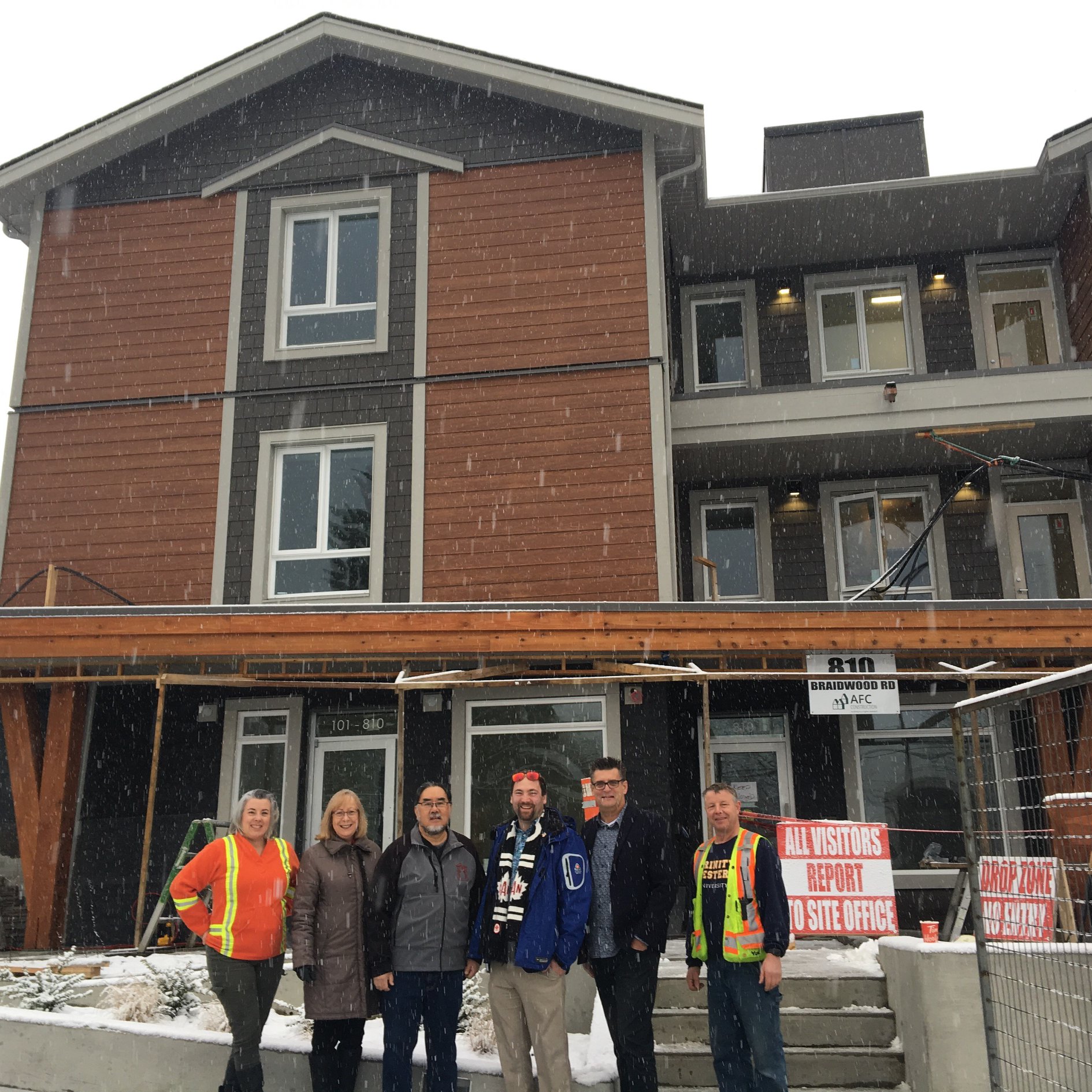
- 810 Braidwood - 35 units for people at risk of homelessness.
- Connect Centre - 33 shelter beds providing temporary accommodation and support.
- The Lodge - 67 units for people at risk of homelessness.
- Salvation Army - Expanded capacity including 18 beds, 20 emergency shelter beds and 6 transitional housing units.
- Darry's Place - 40 units for women and children fleeing domestic violence.
- Mission Ridge - 23 units for people at risk of homelessness.
- Habitat for Humanity - 12 units of affordable homeownership on Piercy Road.
- Cumberland Road - In 2025, CFB Comox purchased a 52-unit building on Cumberland Road.
These projects are different by design. Some provide emergency shelter. Some provide supportive housing. Some provide affordable rental housing. Others help people achieve affordable homeownership.
That distinction matters.
Housing is not one problem
There is no single type of housing that will solve the challenges facing our community.
We need emergency shelter for people who have nowhere else to go.
We need supportive housing for people who require assistance to remain housed.
We need non-market and affordable rental housing.
And we need market housing for people at different stages of their lives and with different incomes.
That is why my approach has consistently been to look at housing as three connected priorities: shelter, non-market housing and market housing.
If we only address one part of the system, we leave gaps elsewhere.
Increasing the supply of housing
There has also been a significant change in the pace of housing construction.
According to the information compiled for this campaign, the number of units being built each year has increased from fewer than 200 to more than 400, with some years surpassing 650.
At the same time, our vacancy rate—which had effectively been at zero for decades—has finally risen above five per cent.
That does not mean the housing challenge is solved.
It does mean that increasing supply matters.
More homes give people more options and create a housing market with more room to move. We need to continue that work while ensuring that shelter and supportive housing remain part of the overall strategy.
The role of senior governments
Municipal governments have an important role to play, but we also need provincial and federal governments at the table.
Major housing and shelter projects require significant capital investment and operating support. Municipalities can provide land, planning, infrastructure, funding and coordination, but we cannot replace the resources or responsibilities of senior governments.
One example is the planned 925 Braidwood project.
The 2026 Provincial Budget maintained the project, following collaborative advocacy.
The planned development includes a shelter building with approximately 73 beds, with the ability to add up to 30 additional beds during extreme weather. A separate supportive housing building is planned to provide approximately 70 small studio homes for local residents who need support to remain housed.
Projects like this demonstrate why relationships between municipalities and senior governments matter.
Collaboration takes persistence
Housing projects rarely happen quickly.
They involve land, financing, approvals, construction, operating agreements and, in many cases, multiple organizations and levels of government.
That means progress often depends on continuing to bring people together and continuing to advocate when projects encounter obstacles.
It also means recognizing that municipalities are part of a larger housing system.
The City of Courtenay does not build all of this housing itself. Our role is to help create the conditions where projects can move forward, to use the tools available to us, and to work with the organizations and governments that have other pieces of the solution.
There is more work ahead
We have made progress, but there is still work to do.
Courtenay needs to continue supporting housing across the spectrum—from emergency shelter through supportive and non-market housing to market housing.
We also need to maintain strong relationships with the non-profit organizations, developers, regional partners and senior governments that make many of these projects possible.
For me, the lesson from the past decade is straightforward: housing requires more than a single announcement or a single project.
It requires planning, partnerships, investment and persistence.
Most importantly, it requires keeping the focus on the people who need a safe and affordable place to call home.
That is the work we need to continue.